|
Dear Valued Customers and Subscribers,
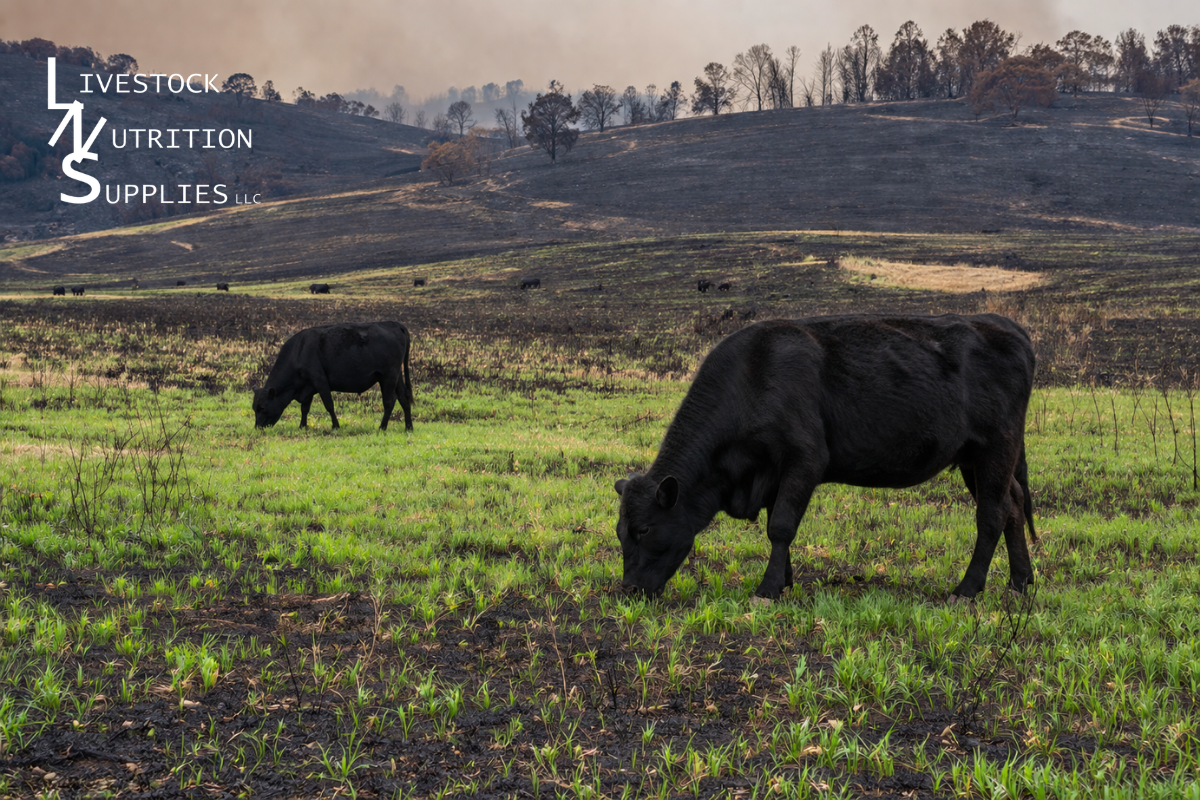
Our thoughts and prayers go out to all who have been affected by the recent fires throughout our Nation. Wildfires are an unfortunate reality in many livestock-producing regions, and their effects extend well beyond the immediate loss of forage. As we move into recovery and regrowth phases, it’s critical to understand how fire impacts pasture quality, forage nutrient composition, and ultimately cattle performance.
Below, we’ve outlined key considerations and practical strategies to help you protect both your forage investment and herd health.
Immediate & Long-Term Effects of Wildfire on Pastures
Wildfires can dramatically alter pasture ecosystems in several ways:
1. Loss of Standing Forage
- Complete removal of above-ground biomass
- Reduced grazing availability in the short term
2. Soil Nutrient Changes
- Temporary increase in soil minerals like potassium and phosphorus due to ash deposition
- Significant losses of nitrogen and sulfur through volatilization
- Reduced organic matter and microbial activity in severely burned areas
3. Forage Regrowth Characteristics
- Early regrowth may appear lush but is often nutritionally imbalanced
- High moisture, high protein, but low fiber and energy density
- Increased risk of anti-quality factors depending on plant species
Nutritional Concerns for Grazing Cattle
As cattle begin grazing post-fire regrowth, several key risks should be managed:
• Protein–Energy Imbalance
- Regrowth is often high in crude protein but lacking in digestible energy
- This imbalance can reduce feed efficiency and performance
• Mineral Deficiencies
- Sulfur and trace minerals (Cu, Zn, Se) are often deficient post-fire
- Ash may create temporary mineral imbalances but does not replace proper supplementation
• Nitrate Toxicity
- Regrowing forages, especially under drought or stress, may accumulate nitrates
- Testing is highly recommended before grazing
• Reduced Fiber Intake
- Low effective fiber can impact rumen function and reduce cud chewing
Recommended Supplementation Strategies
To support cattle grazing burned and recovering pastures, consider the following:
1. Energy Supplementation
- Provide digestible energy sources (liquid feeds, tubs, or grains)
- Helps balance excess rumen degradable protein
2. Protein Management
- While crude protein may appear adequate, bypass (undegradable) protein may still be needed
- Avoid over-supplementing degradable protein
3. Mineral Supplementation (Critical)
Ensure a complete, balanced mineral package including:
4. Fiber Sources (if needed)
- Hay supplementation may be necessary to maintain rumen health
Pasture Recovery & Management Best Practices
Proper management following wildfire can significantly accelerate pasture recovery and long-term productivity:
1. Delay Grazing
- Allow adequate regrowth before turnout (typically 4–8 inches minimum)
- Prevent overgrazing of vulnerable plants
2. Implement Rotational Grazing
- Reduce stress on recovering forage
- Improve plant vigor and root development
3. Soil Testing
- Identify nutrient deficiencies post-fire
- Guide targeted fertilization strategies
4. Fertility Management
- Nitrogen applications may be needed to replace losses
- Consider sulfur-containing fertilizers if deficiencies are identified
5. Weed Control
- Disturbed soils are prone to invasive species
- Monitor and control early to protect forage stands
6. Reseeding (if necessary)
- Severely burned areas may require overseeding or full renovation
- Select drought-tolerant and regionally adapted species
7. Erosion Control
- Maintain ground cover where possible
- Use practices like contouring or cover crops if needed
8. Water System Monitoring
- Check for contamination from ash runoff
- Ensure clean, adequate water supply
Final Thoughts
While wildfire can be devastating, it also presents an opportunity to rebuild stronger, more productive forage systems with the right management approach. Strategic supplementation and careful grazing management are essential to maintaining cattle health and performance during recovery.
Partner with Livestock Nutrition Supplies LLC
Our premium vitamin, mineral, probiotic, and garlic supplements are formulated for maximum bioavailability and performance. Whether you're feeding horses, cattle, hogs, sheep, goats, or poultry, we can help ensure your animals get the nutrients they need to thrive — and your operation gets the results you deserve.
Questions or need help setting up a mineral program tailored to your farm?
Contact your livestock nutritionist, veterinarian or local extension office—they're here to help!
Check out our High-Quality Vitamin, Mineral and Protein Supplements to help maximize your herds health. https://livestocknutritionsupplies.com/shop/
Stay informed, stay proactive, and together, let’s safeguard the well-being of our livestock.
Livestock Nutrition Supplies LLC
Info@LivestockNutritionSupplies.com
(531)333-3150

https://livestocknutritionsupplies.com/shop/
For any questions or further information, please do not hesitate to contact us. We’re here to help you provide the best care for your animals.
|